nowhere
A ruin on the Alentejo coast is reimagined as a quiet refuge where California ease meets the raw, timeless spirit of southwestern Portugal.

Located just 15 minutes from the Atlantic coast, this former rural ruin sits within the vast, open landscape of Alentejo — a place defined by light, silence, and a deep connection to land and tradition. The project was commissioned by an American couple seeking to create a personal getaway from city life, while also allowing the house to function as a small-scale Alojamento Local, generating additional income when not in use.
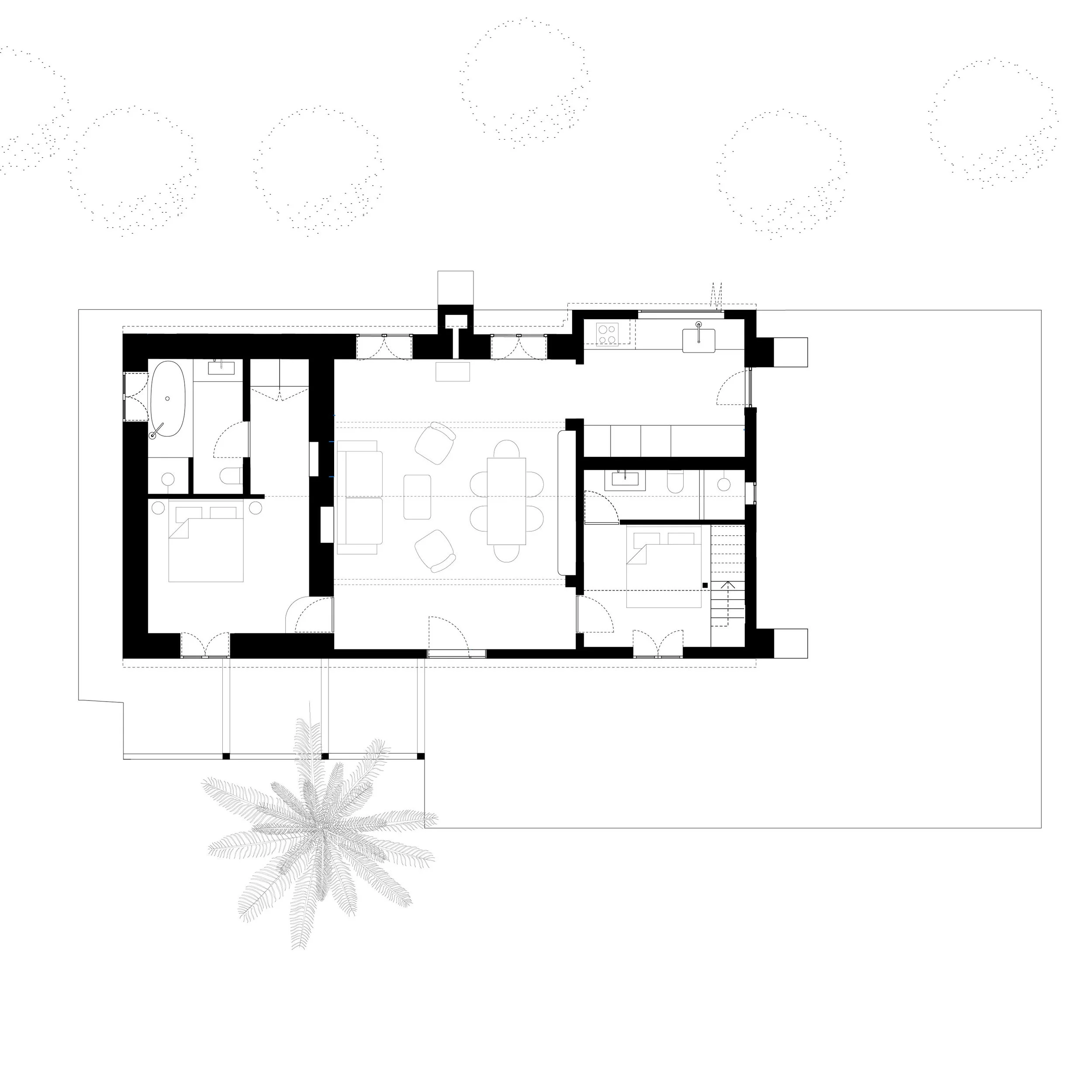
The challenge was to transform a highly compact and fragmented existing structure into a functional, fluid home without altering its external character. The original building presented limited natural light, poor spatial flow, and an inefficient organization, particularly in the relationship between public and private spaces. Any intervention had to respect strict local regulations, preserve the traditional façades and roof geometry, and remain grounded in the architectural language of the region.
The design approach focused on reorganizing the internal flow, enhancing spatial clarity, and strengthening the relationship between interior and exterior, while preserving the authenticity of the original structure.
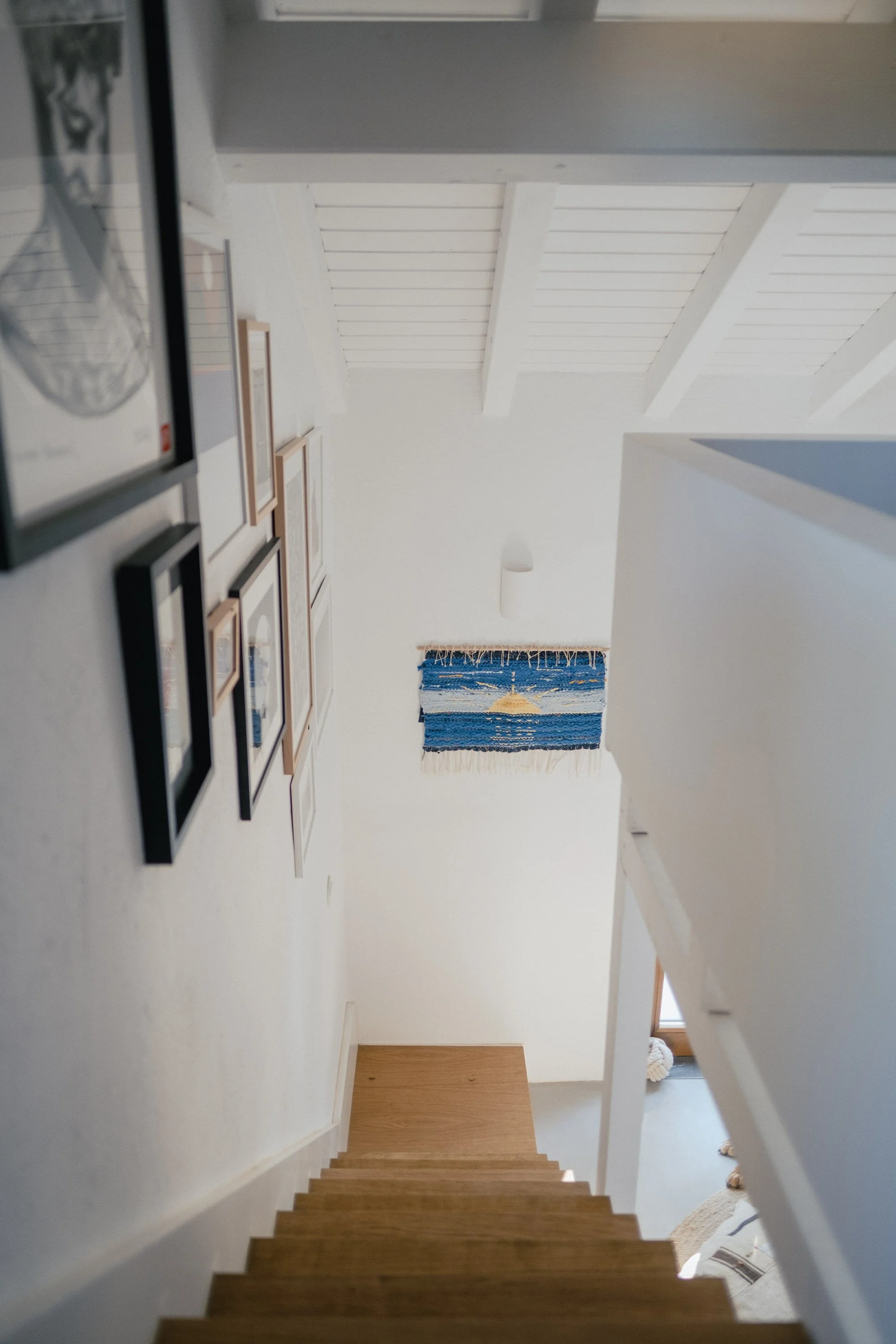
Public and private areas were carefully redefined to improve functionality and comfort. One of the key moves was the relocation of the stair into one of the bedrooms, freeing the main living space and allowing it to function as a calm, continuous social area. The stair was reimagined as a custom-built wooden element that combines storage, wardrobe, and vertical circulation — a functional object that becomes an architectural feature.
Openings were enlarged and repositioned to dramatically improve natural light, cross-ventilation, and views to the surrounding landscape. In the kitchen, a large window was introduced to create a direct indoor–outdoor connection, extending the counter visually and spatially toward the exterior. In the living room, two enlarged windows were positioned to form built-in window benches, inviting slower moments of rest and observation.
Material choices were intentionally restrained and rooted in contrast. The original terracotta floor tiles, damaged beyond repair, were replaced by a continuous microcement floor, introducing a subtle layer of modernity within the rustic shell. Custom-built furniture in the main living space serves simultaneously as storage, buffet, and shelving, reinforcing the idea of architecture and furniture as a single, cohesive system.
Wooden doors and cabinetry bring warmth and tactility, while black metal handles and lighting fixtures introduce an industrial edge that reflects the clients’ aesthetic sensibility. The main bathroom was designed as a retreat within the home, offering a spa-like experience with a freestanding bathtub oriented toward the landscape, complemented by a generous walk-in shower.
NOWHERE House is a quiet transformation — one that prioritizes atmosphere, light, and everyday rituals over spectacle. By preserving the exterior identity of the building and carefully reworking its interior, the project creates a timeless retreat that feels both deeply local and subtly international.
More than a renovation, the house becomes a place to pause, reconnect, and collect memories — a space shaped equally by the land, the clients’ journeys, and a shared belief that architecture should support slower, more intentional ways of living.
As the clients describe it themselves, nowhere is “a space to call home while traveling, reset your body, and escape the city grind — a place where time stands still.”